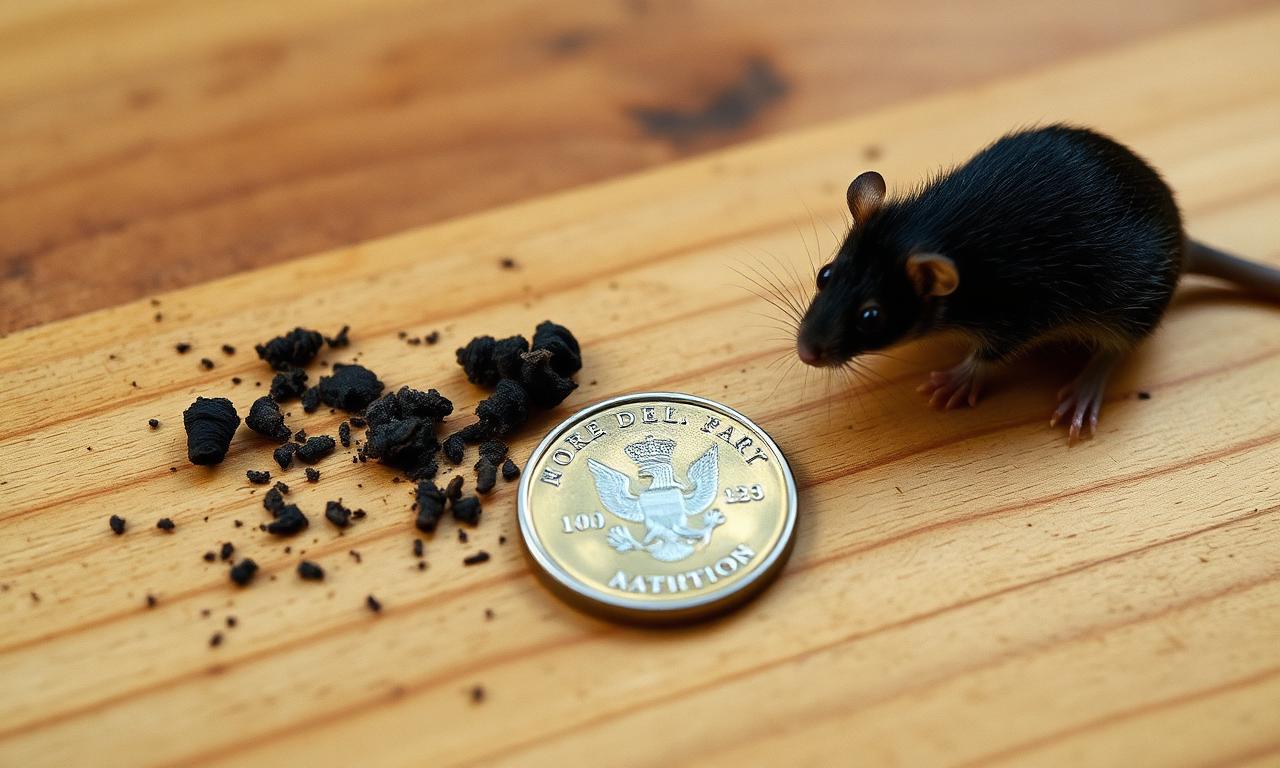
Rodent droppings are the most reliable infestation evidence — they don't move, they don't hide, and the species is usually obvious once you know what to look for. The two questions to answer are: how big, and where.
Size and shape
- Mouse droppings: 3–6mm long, pointed at both ends, dark brown to black when fresh, fading to grey as they dry.
- Rat droppings: 12–18mm long, blunt or rounded ends, almost black, often shiny when fresh.
- Squirrel droppings: 8–12mm, similar to rat but lighter brown and usually found outdoors near a tree or loft entry point.
Distribution — the second tell
Mice produce 50–80 droppings a day and scatter them as they move. You'll find them everywhere along their route — kitchen counters, drawers, the back of cupboards, behind appliances. Rats produce fewer, larger droppings (30–50/day) and tend to leave them in clusters near nesting or feeding sites.
Fresh vs old
Fresh droppings are dark and shiny with some give when pressed. Old droppings are dull, grey, and crumble to dust. If you clean the area thoroughly and new droppings appear within 24 hours, you have an active infestation, not historic evidence.
What to do next
Confirmed mouse droppings: see our signs of mice guide for the full identification checklist, or the mice species page for treatment. Confirmed rat droppings: rats reproduce faster and carry more pathogens — treat as urgent. Both are covered by most councils, but private operators are usually 5–10 days faster.