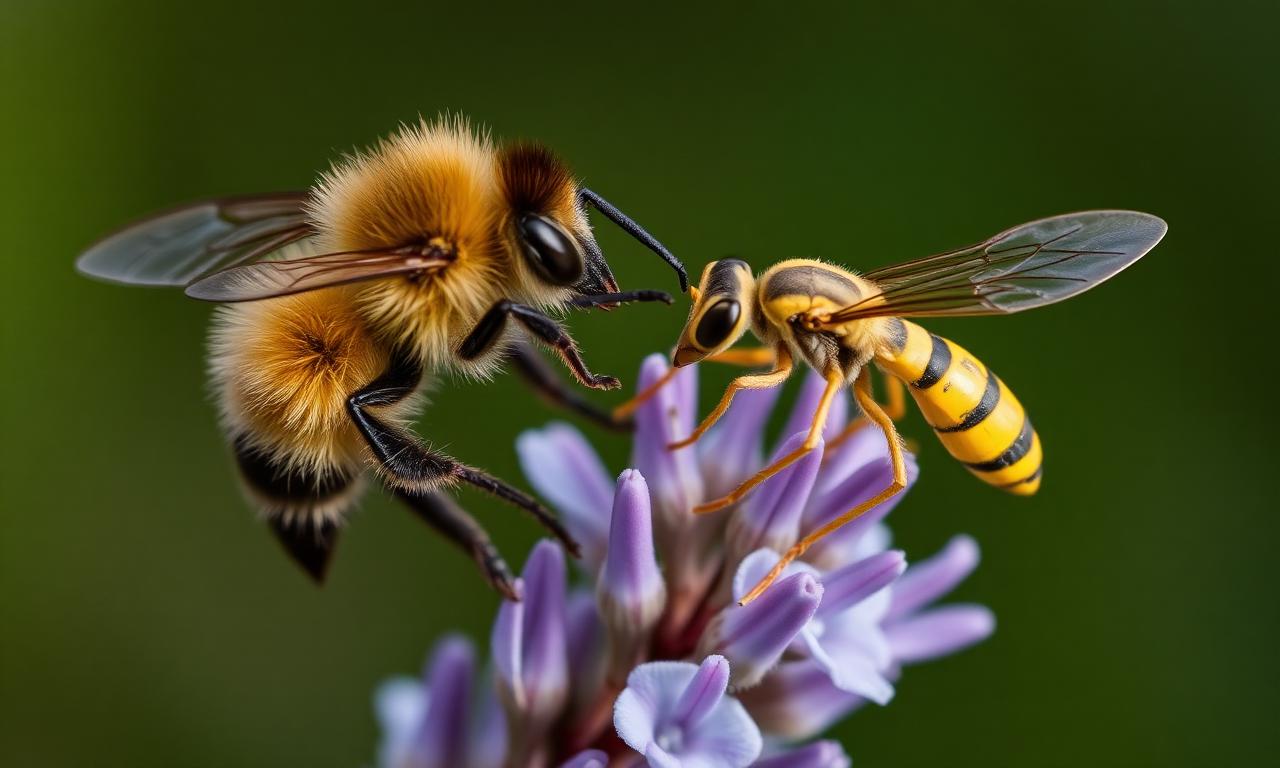
Bees and wasps look superficially similar but belong to different families with different ecological roles and different legal status. The identification chain matters because honeybee colonies and bumblebee nests should usually be relocated, not destroyed — and a pest controller will quote differently for each.
Body shape and texture
- Honeybee: 12–15mm, golden-brown with darker bands, fuzzy thorax, broad flat abdomen, pollen baskets on the back legs.
- Bumblebee: 15–25mm, very fuzzy all over, rounded body, slow heavy flight.
- Common wasp: 12–17mm, bright yellow-and-black, SMOOTH and shiny, narrow 'wasp waist' between thorax and abdomen.
- Hoverfly (often mistaken for wasp): 8–15mm, yellow-black mimic, but only two wings (wasps have four), hovers in one spot, harmless.
Behaviour
Bees foraging on flowers are calm and indifferent to humans. Wasps near a food source (bin, beer garden) are persistent and investigative. Bees defend a hive only when it's directly threatened; wasps will defend a 5m radius around a nest unprompted, especially in late summer.
What to do with a honeybee swarm
A honeybee swarm hanging from a tree or eave is a queen looking for a new home — they're at their least aggressive in this state. Contact your local British Beekeepers Association (BBKA) swarm coordinator and a beekeeper will usually collect it free within 2–4 hours. Don't call a pest controller for a swarm.
What to do with a wasp nest
Confirmed wasp nests within 5m of doorways, near sleeping areas, or in lofts should be treated. See our wasp species page, the signs guide, or the wasp nest removal cost guide for 2026 pricing.