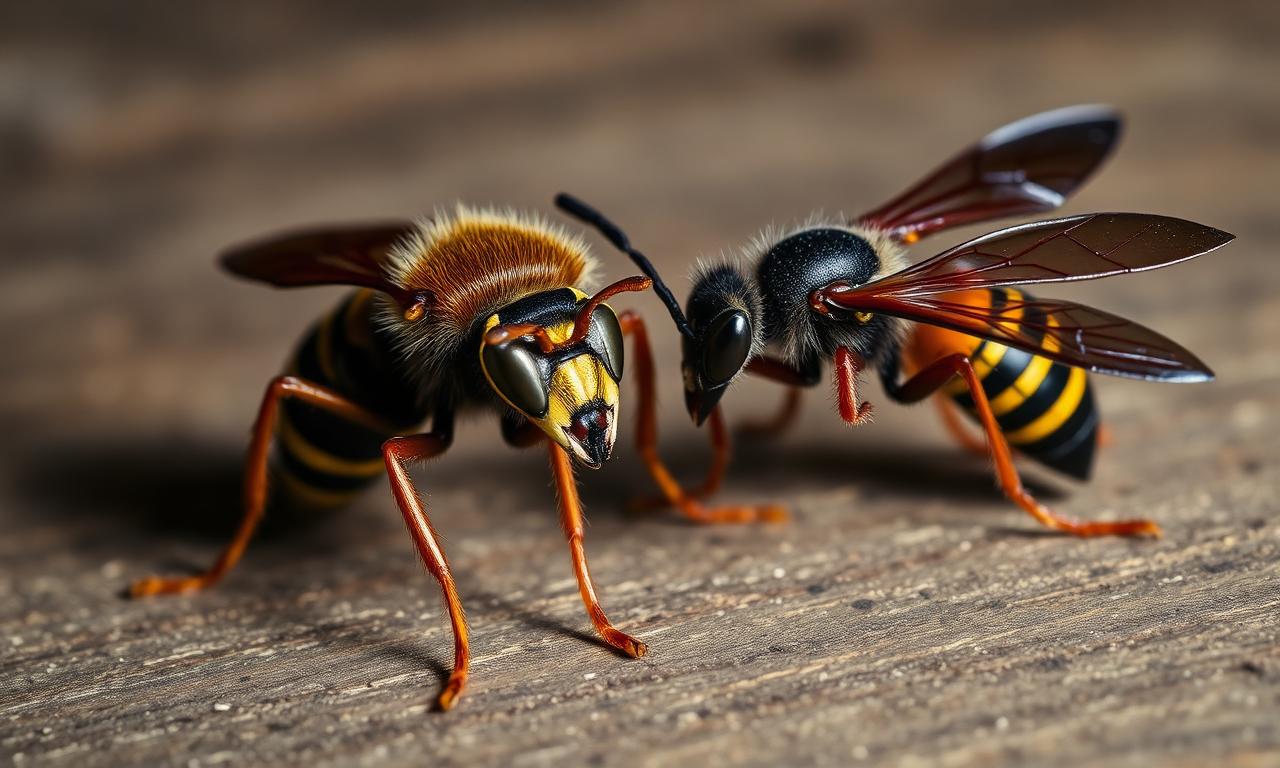
The Asian hornet (Vespa velutina) is an invasive species first confirmed in the UK in 2016. It's a documented threat to honeybee colonies and is on the GB list of invasive species of special concern, which makes confirmed sightings notifiable to DEFRA's National Bee Unit.
Side-by-side identification
- Common wasp (Vespa vulgaris): 12–17mm long, bright yellow + black bands across the abdomen, all-black legs, yellow face.
- European hornet (Vespa crabro): 25–35mm long, reddish-brown thorax, yellow abdomen with dark stripes, red-brown legs. Native and harmless to ecosystem.
- Asian hornet (Vespa velutina): 20–30mm long, almost entirely dark brown or black body, single yellow-orange band near the rear of the abdomen, distinctive YELLOW LEGS. This is the giveaway.
Why it matters
A single Asian hornet nest can kill 11kg of honeybees in a season. They also predate on hoverflies and other pollinators, so the impact extends beyond apiaries. Early reports allow the Animal and Plant Health Agency (APHA) to track and destroy nests before they produce next-generation queens in autumn.
What to do with a regular wasp nest
If you've confirmed it's a common wasp, see our wasp emergency page for treatment timing, our wasp species page for nest identification, and our wasp removal cost guide for typical 2026 pricing.